Review: “The Remains of the Day” by Kazuo Ishiguro
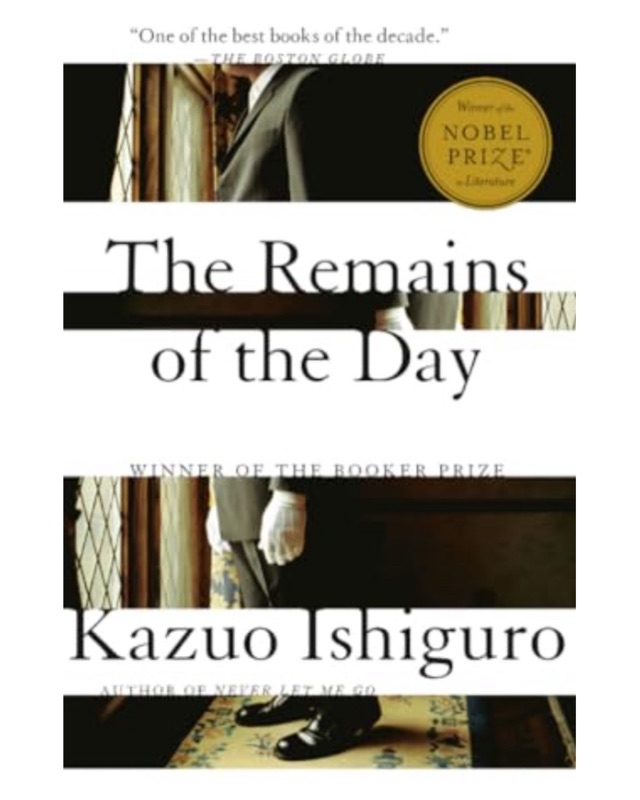
🍴 Ishiguro conveys a sense of days gone by for the downstairs staff from the perspective of the butler, Stevens. Post WWII, the large “distinguished” mansions operate with drastically reduced household staff, and few large hosting duties. Stevens’ delays in locking up before departing for a short trip when this meant leaving Darlington Hall wholly unoccupied for the first time in a century, was a poignant nod toward changing times.
🍴I liked that Ishiguro treats the narrative as a journal for Stevens’ musings. He wasn’t really talking to us, as talking to himself. It makes some of his weak justifications all the more tragic, as he is struggling to keep up appearances to himself.
🍴 An aside, Lord Darlington’s pre-WWII conduct involving Lord Halifax, required a quick jump down the rabbit hole to read about the war cabinet crisis of 1940. It was also interesting to note the specific views in the aftermath of WWI, that led to Darlington’s public disgrace. Fascinating times!
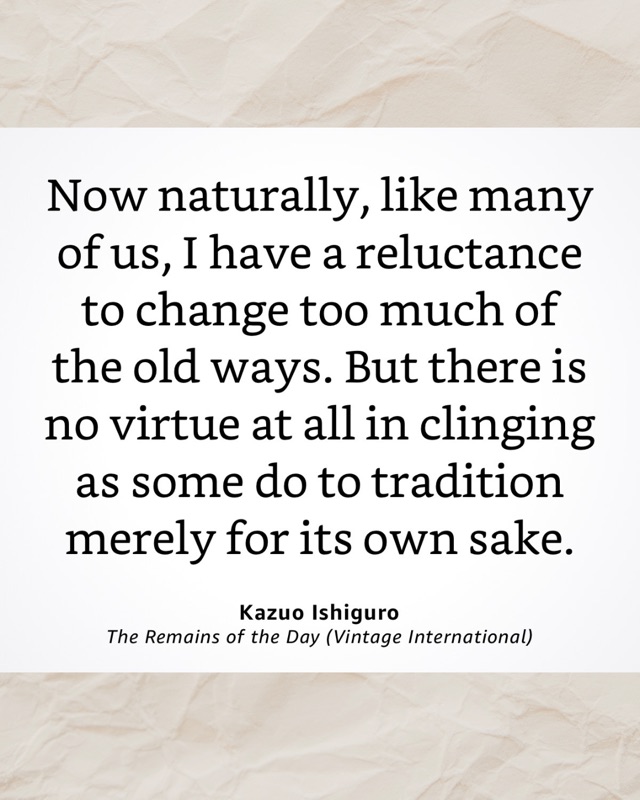
☕️ Stevens is so burdened by class conventions and crippling concerns about propriety, that he is entrapped by his profession. He is a dignified automaton, never allowing himself curiosity about the world beyond Darlington Hall, nor emotion other than indignation at protocol breaches. He maintains this strict separation even in his own rambling thoughts.
☕️ He ruminates at length about what makes a great butler and notions of dignity, rather than mundane matters of the heart or happiness, or global matters of war. His prattling goes on for pages at a time. It is most definitely a bore (fair warning!), but it illustrates the depth of Stevens’ social conditioning.
☕️ It is under his new, American employer, that Stevens’ shell begins to crack. He chides himself for his inability to engage in casual banter as he remains “in character” at all times. It is this perceived failure to meet expectations that unravels his truest feelings.
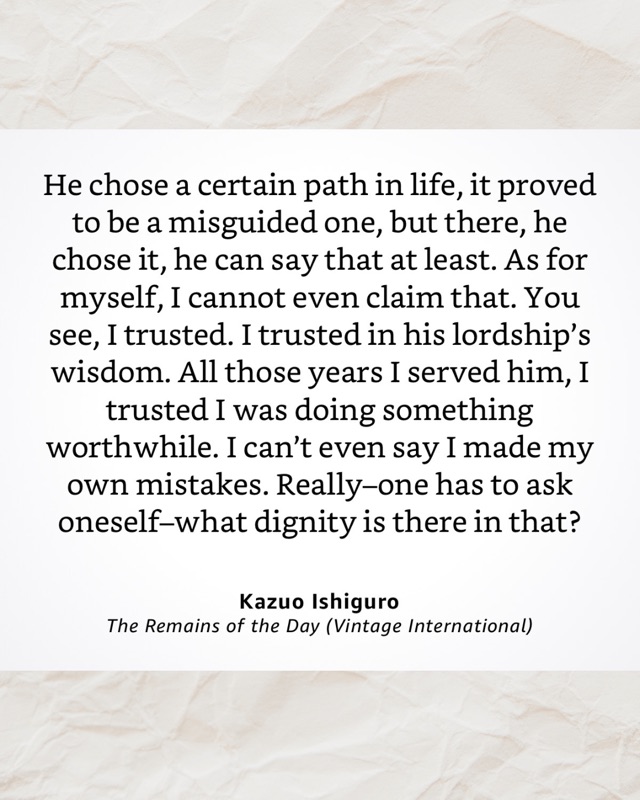
🍴 Miss Kenton implored Stevens to stop pretending; his final self-reflection might be more accurate. He was too trusting.
🍴 He would be offended if we pointed out to him that his thoughts implicate that most human of emotions: love. Or rather, love lost. We observe the very public disgrace of the deified Lord Darlington, the passing of Stevens’ cold father, and the departure of Miss Kenton.
🍴 Stevens does not want our sympathy, but we come to feel sorry for him. We pity his myopia, and the delusions of distinction he has attached to his service, in order to justify his existence.
🍴 As theirs was an unusual (almost absurd) love story, I’m interested in the film adaptation to see how Anthony Hopkins and Emma Thompson work with this material. My guess is that more of the humor may come out onscreen.


Comments
Post a Comment