Review: “The House in the Cerulean Sea” - T. J. Klune
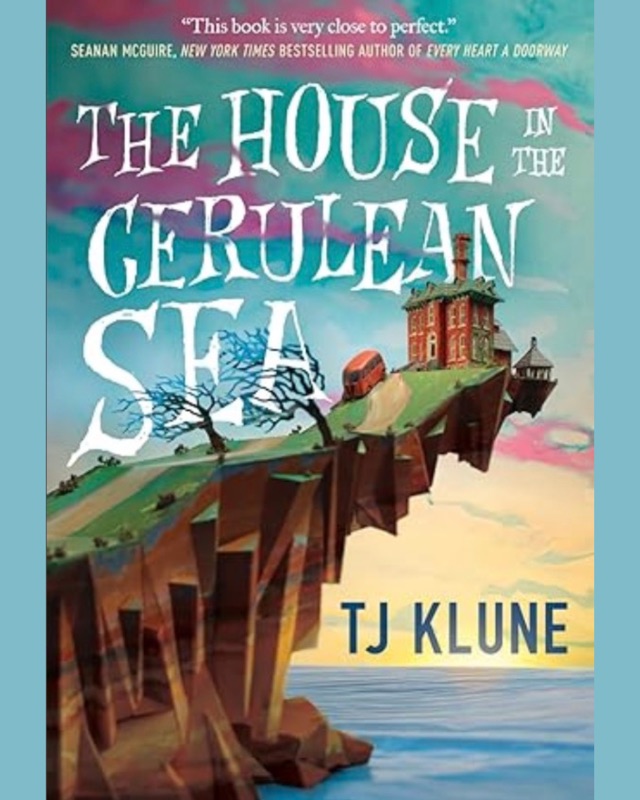
🌊 This is a soulful story about a group of misfit magical children, and those who fear and despise them. It is an allegory for society’s treatment of LGBTQ+ youth and indigenous communities (and also Black people, undocumented immigrants, people with mental or physical disabilities). Klune speaks to any group that is perceived as the Other.
🌊 Klune is not subtle with his main inspiration. The government in HCS favors assimilation of magical children for “the greater good” at the hands of governmental agencies lacking input from the magical community itself. In the real world, we are still contending with a long and terrible history of the forced assimilation of indigenous children in this precise manner.
🌊 Klune’s description of the dreary city, the drudgery of the DICOMY offices, and Linus’ stifled existence, put me in mind of Aldous Huxley’s “Brave New World”. Klune’s narrative style blossoms as Linus escapes the city. He used the word “sluiced” - which I had the pleasure of looking up.
🌊 A fantastical tale, sharing common ground with the likes of Harry Potter, Klune’s social justice message is sharp and unmistakeable.
🚨 🚨 🚨 🚨 🚨 🚨 🚨 🚨SPOILERS AHEAD 🚨 🚨 🚨 🚨 🚨 🚨 🚨 🚨

🌊 Odds and Ends
Ultimately, these six magical children have a happy ending, but they remain registered and closely monitored by the government. They find peace within the broken system. I suppose this is Klune’s point: change begins at the micro level.
Extremely Upper Management ultimately approves the on-going operation of Parnassus’ home for reasons unknown; there was no indication that they possessed consciences, nor that Linus had any leverage. As it stands, the approval was granted on unknown grounds, so we’re left wondering if it was tenuous.
His mention of counter-protestors put me in mind of BLM, and the comfort of seeing more and more people speaking out.
The least remarkable thing about Linus and Arthur, and their relationship, is that they are gay. Klune is pointed in making it so. Representation matters.
I thought Werner’s personal vendetta (sparking the investigation) was not explored proportionally to its role in spurring the conflict.


Comments
Post a Comment