“A Room with a View” - E. M. Forster
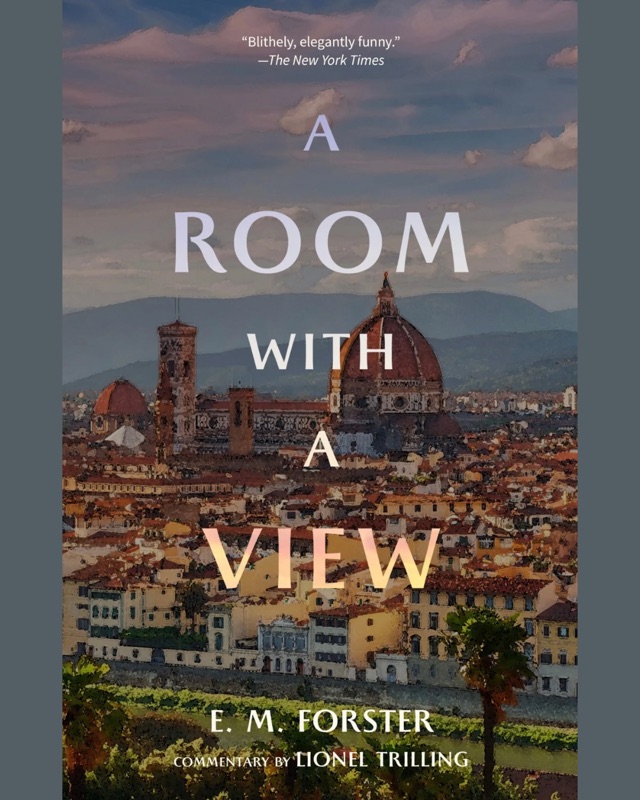
🧳 ARWV is a classic (no doubt), but the romance label is somewhat misleading IMO. Yes, there’s love. But what Forster really gives us is the startling moment when a person realizes she has been living in the approved version of herself rather than the authentic, and the chaotic aftermath of that moment of clarity.
🧳 Lucy Honeychurch is surrounded by people who speak fluent Respectability. They mean well. They’re invested. And they’re absolutely sure they know what’s best for her—which, honestly, has a very modern echo. Swap drawing rooms for group chats and curated life updates, and the pressure feels familiar: be aesthetic, be agreeable, be chosen.
🧳 What I love most is how Forster frames freedom as something both exhilarating and terrifying. Italy isn’t just a setting—it’s an interruption. A break in the script. A reminder that “good” isn’t the same as “alive.”
🧳 There’s something wonderfully sneaky about ARWV. It wears the cloak of a classic romance—Edwardian manners, scenic Italy, a love triangle with strong opinions about propriety—but it’s really a novel about selfhood. About the danger of living too politely when you’re handed a perfect life plan that isn’t yours.
🧳 Lucy Honeychurch begins the book as someone carefully arranged. Not unhappy, exactly—just managed. Her world is filled with people who have mastered that particular tone of voice that makes a preference sound like a moral law. They aren’t villains. They’re guardians of the acceptable. They believe in comfort, in rules, in not doing anything that could become a topic at tea.
And then Italy happens.
Forster uses Florence like a plot device and a personality test. It’s sunlit and chaotic and beautiful in the way that makes you slightly more honest. The Emersons—unpolished, sincere, allergic to social theater—feel almost shocking in contrast. Not because they’re scandalous, but because they’re real. They speak like people who mean what they say. That alone is destabilizing.
🧳 It’s tempting to read Lucy’s choices as simply romantic—Cecil vs. George, security vs. passion. But the deeper question is identity: who does Lucy become when no one is watching? Or, more pointedly: who does she become when she stops performing?
🧳 That’s where the book feels so modern to me. It’s amazing how Lucy and her “muddles” resonate with the modern woman. Lucy’s problem isn’t just that the people around her have expectations—it’s that their expectations arrive in the guise of goodness. This is the “right” match, the “right” kind of engagement, the “right” kind of life. Aesthetic compatibility. Social approval. A future that photographs well.
And if that doesn’t sound like 1908, it’s because it also sounds like now.
🧳 We live in an era where it’s easy to confuse presentation with happiness. Where a life can be perfectly curated and still feel strangely distant from the person living it. Where choices are praised for being tidy: a career that makes sense, a relationship that looks stable, an existence that can be summarized neatly in a bio.
🧳 Forster saw this kind of pressure with unnerving clarity. He understood how control can be dressed up as care, and how compliance can masquerade as virtue. ARWV isn’t only asking Lucy who she loves. That’s more of a subplot. It’s mainly asking whether she has the courage to disappoint people in order to be her authentic self.
🧳 And Forster, being Forster, refuses to let us romanticize the cost. Breaking from convention isn’t painless. It means awkwardness and consequences. Lucy can’t un-know herself once she has seen what she truly wants in life.
🧳 What makes the novel endure is its insistence that freedom is not merely a grand concept—it’s a series of small refusals. A decision to stop smoothing your own edges. A willingness to be misunderstood for a while. A series of small steps toward the life that feels like a breath of fresh air.
In the end, ARWV isn’t just about getting the view. It’s about getting the room—the space to be fully, imperfectly yourself.
And that feels like a modern need in any century.


Comments
Post a Comment