Review: “Buried Giant” by Kazuo Ishiguro
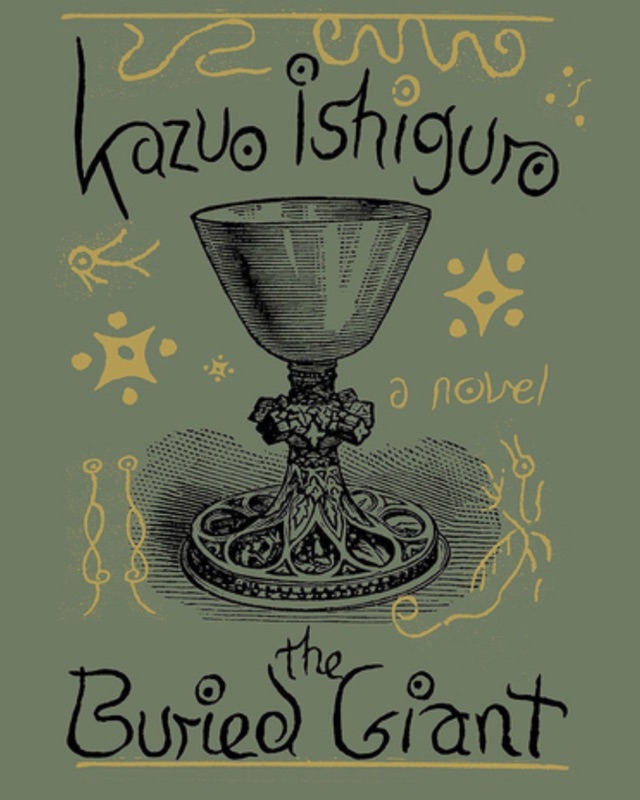
Review: “Buried Giant” by Kazuo Ishiguro
🗡️This book was thought-provoking to say the least. It is a fantastical tale set in post-Arthurian Britain. The language put me in mind of “Lord of the Rings” and I anticipated some morality questing. I was quickly disabused of this notion as it’s much (much!) more than that. BG was not my typical literary fare. I gravitate toward books that let you pull out ethically loaded quotations and reflect on them. TBH I struggled with this one. But I’m glad I finished it because I think the frustration and deep confusion/sense of being lost I often felt with it was intentional on Ishiguro’s part.
TBG is less about “what happened” and more about whether remembering always morally good.
Despite initially wanting to put it down bc it was SO confusing, I am glad I stuck with it. It is structured it to be confusing intentionally. It read like a vague, misty dream because its central symbol is forgetfulness itself. Rather than a plot-driven fantasy, it’s an allegory about memory, collective trauma, and whether forgetting can ever be merciful. It is as deep as you would expect Ishiguro to be. There is a quest, but it’s only a fraction of the story.
🗡️Why It Feels Confusing
• Dialogue is deliberately formal and vague.
• Time feels circular rather than linear.
• Characters often don’t fully know their motivations.
What’s the message? Forgetting can preserve love and peace, but at the cost of truth. Ishiguro asks whether a society (or a marriage) built on partial memory can ever truly be just or secure.
In TBG Ishiguro’s style mirrors how memory itself works — incomplete, softened, and sometimes self-protective. Isn’t this how we sometimes recall events? In confused snippets dulled by time. Genius!
🗡️The mist as collective forgetting
The literal mist that causes everyone to lose their memories symbolizes societal amnesia. In traumatic circumstances, cultures suppress or soften the memory of violence, injustice, or war so that daily life can continue.
• On the personal level: couples forget betrayals or grief.
• On the national level: entire peoples forget atrocities committed against each other.
• Ishiguro is asking: Is peace built on forgetting real peace, or just fragile denial?
🗡️Querig is the mechanism of suppression
The dragon (Querig) is not just a fantasy creature; it represents the active force that maintains forgetting.
Symbolically, the dragon is:
• political power
• historical revisionism
• shared social agreements not to “bring up the past”
Killing the dragon would restore truth — but also revive rage, guilt, and cycles of revenge. So the question becomes: Is truth always morally superior to peace?
🗡️Axl and Beatrice represent personal memory versus love
As TBG progresses, we learn that their journey is less an adventure and more a test of their marriage.
They symbolize:
• how long relationships depend on selective remembering
• whether love survives the full truth
• the fear that remembering everything might unravel affection
In this way, the novel quietly parallels “The Remains of the Day” (emotional restraint and self-deception as survival strategies).
🗡️The setting of post-war Britain is a sort of universal “aftermath”
Although set in a mythic Arthurian Britain, the land functions symbolically as any society after conflict (including modern ones). You could easily see how this would apply to the collective trauma of genocide.
So the setting is less “fantasy world-building” than I imagined, and more of a moral thought experiment. As I said at the beginning, there was certainly a great deal of questing involved, but that was just the beginning with TBG.
🚨 🚨 🚨 Please note there are possible **SPOILERS** below as well as questions and observations I had while reading, in no particular order. This novel was difficult, so I found it helpful to take notes as I went along. 🚨 🚨 🚨
🗡 BG is about lost memories and love, both romantic love and neighborly harmony. Despite the focus on love, this tale is harsh and unrelenting, even brutal at times.
🗡 Ishiguro plays with the heroic quest archetype. Here our heroes are off on a quest, but to what end?
🗡 As we proceed, we come to realize the nature of the quest inexorably leads them to the dragon Querig.
🗡 Is Querig the dragon truly the antagonist here with her memory-wiping breath? Or was she actually the foundation for harmonious existence between Saxon and Briton? Given Merlin’s involvement, she is a law-enforcement relic of the Arthurian regime.
🗡 Is the encounter in the villa with the vengeful old woman and the boatman an early clue for our heroes’ fate?
🗡 The traumatic scene with pixies that affect Beatrice directly and Axl indirectly, foreshadows her unfaithfulness
🗡 Edwin is meant to personify the vengeful moral code, but like Wistan, he cannot fully harden his heart against Britons
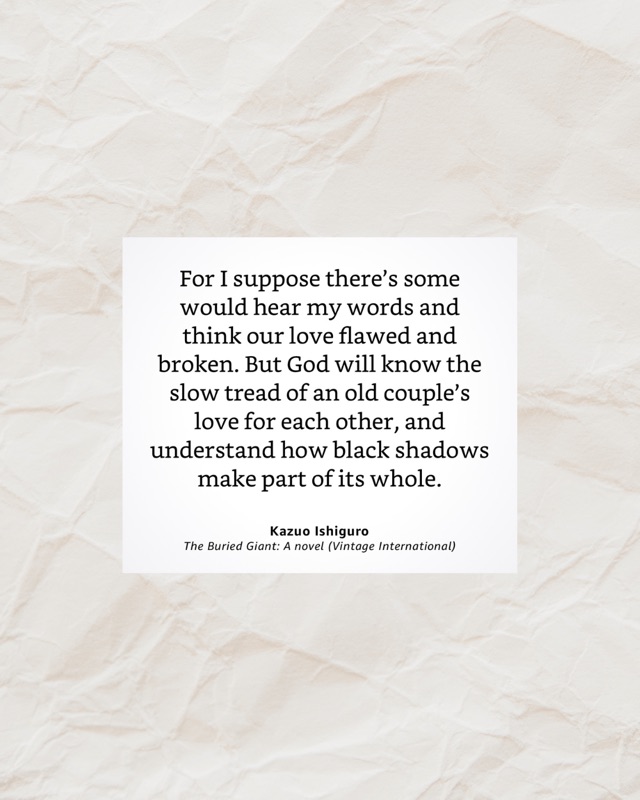
🗡 I don’t believe Axl is ferried to the island to live alongside Beatrice. Their evident tenderness in old age relied upon the mist to develop. I don’t think the boatman can sanction their “special dispensation”. Beatrice recognizes this based on her own sin Axl’s own (greater?) sin, and comes to terms with their fate.
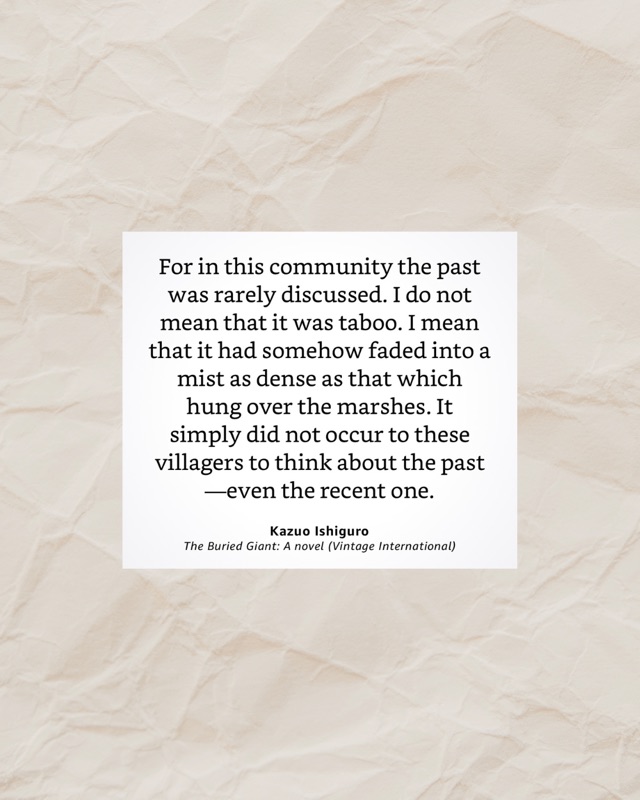
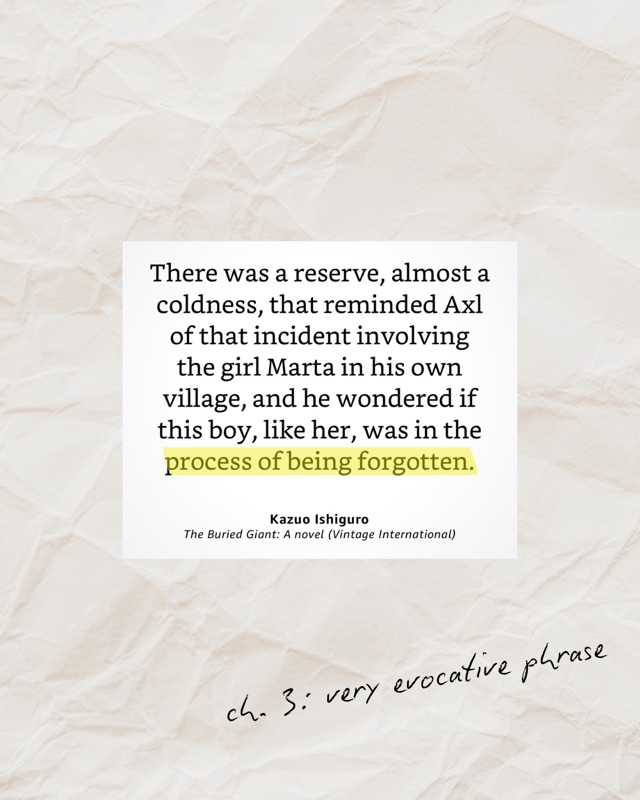
- the Saxons of the village remembered “all too well” the harrowing experience the young boy Edwin had recently endured, this memory they used to persecute him
- A and B recall same episode differently
ch 4
- secret of Edwin’s wound - from a strange snake-bird creature, not an ogre bite....why the secrecy?
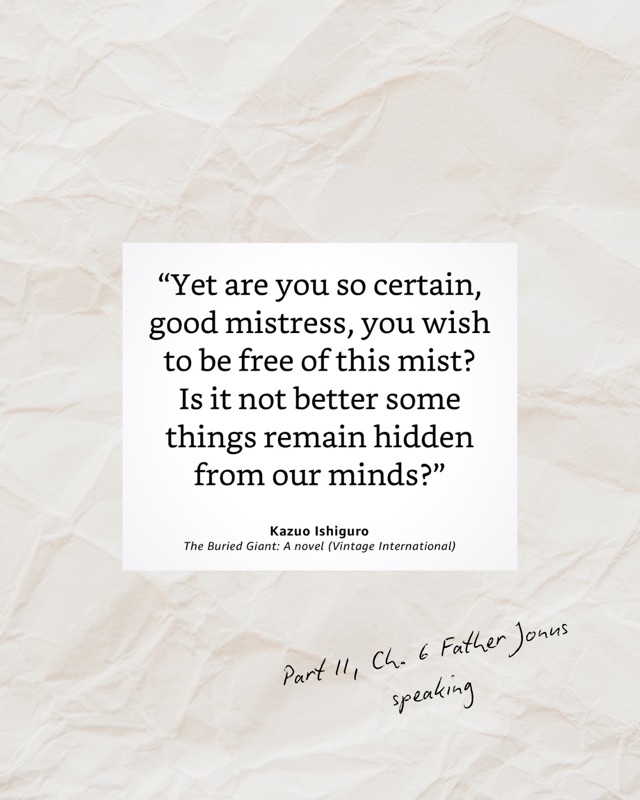
Part III
- Is the woman’s voice that Edwin hears after being bitten by the dragon, the voice of Querig luring him to her, not his birth mother as we are lead to believe?
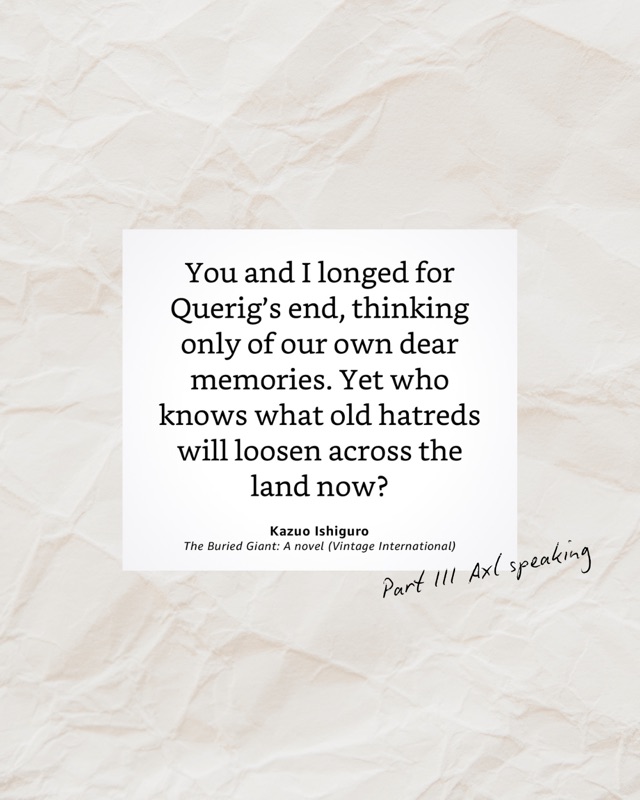
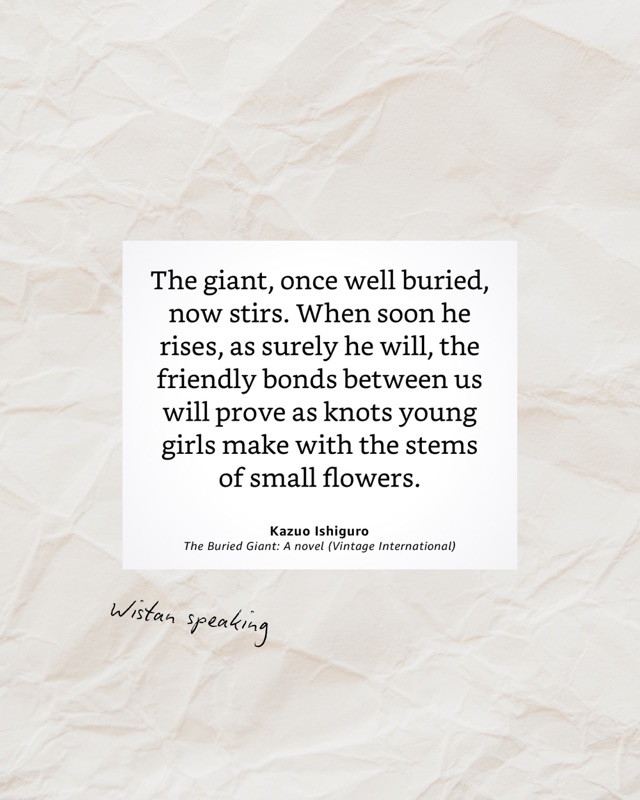
- Is Querig the dragon truly the antagonist here with her memory-wiping breath? Or was she actually the foundation for harmonious existence between Saxon and Briton?


Comments
Post a Comment